
The Human Effort Compression Cycle
A Manifesto
Five times, a new technology has compressed an entire category of human effort and displaced the people whose livelihoods depended on it. AI is the fifth, and the fastest.
Here's the pattern, the evidence and the window. And how to get ahead before it closes.
Some of what follows is hard to believe. All of it is documented, with sources and notes at the end of each chapter. This is evidence, not opinion.
The Compression Pattern
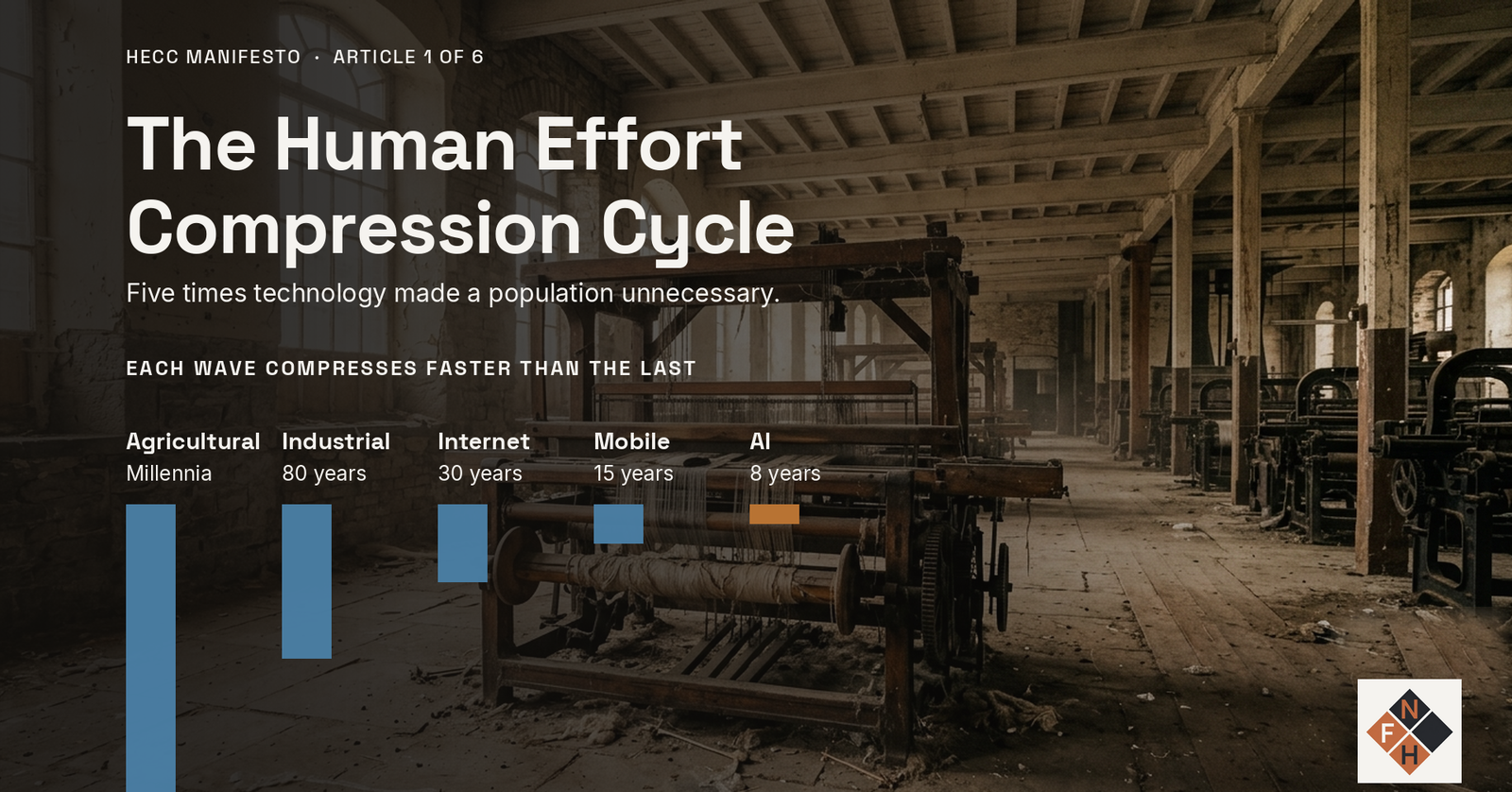
Hunter-gatherers were healthier than the farmers who displaced them. Farming won anyway, and a whole population lost its place in the economy. That was the first human effort compression wave. This chapter sets out what makes one: who gains first, who waits, and the new layer of work each one creates.
The Five Waves

Weavers lost to steam power, travel agents to the internet, taxi drivers to the smartphone. Now knowledge workers whose primary output is cognitive and creative are losing ground to AI. This chapter takes all five waves in turn, each with its numbers and the new roles that came after.
The AI Wave Is Different

In 2023, AI systems solved 4.4% of problems on SWE-Bench, a standardized coding benchmark. In 2024, that number was 71.7%. The AI wave is happening faster, deeper, and into territory no prior wave ever reached: thinking itself. The window to adapt is the shortest in history.
Who Is Most at Risk in Wave 5

The graduate is losing the entry-level jobs that used to teach the craft. The mid-career executor keeps the title but loses the work that fills the day. The senior specialist watches decades of expertise become training data. All three have a move to make now.
What Gets Elevated

Two project managers can hold the same title and do almost nothing in common: one feeds the machine, the other directs it. Work for the first person is shrinking, and demand is growing for the second. So is the need for the electricians, pipefitters and crane operators who build AI's data centers.
The Call

Everyone writing about AI and work lands on the same word: adapt. Almost none of them say what adapting actually looks like on a Tuesday morning. This chapter does: the Layer Split, a twenty-minute exercise you do on paper. It also names what companies capturing AI's gains owe their people.
Companion Materials
The manifesto makes the case. These companion pieces help you act on it: see which jobs AI is lifting into demand, apply the framework to your specific role, get your questions answered, and use the language with precision.